Teleconference Held Between Scholars of Zh. A. Tashenev University and the Pokrov Branch of Moscow State Pedagogical University
2026-09-16
Teleconference Held Between Scholars of Zh. A. Tashenev University and the Pokrov Branch of Moscow State Pedagogical University
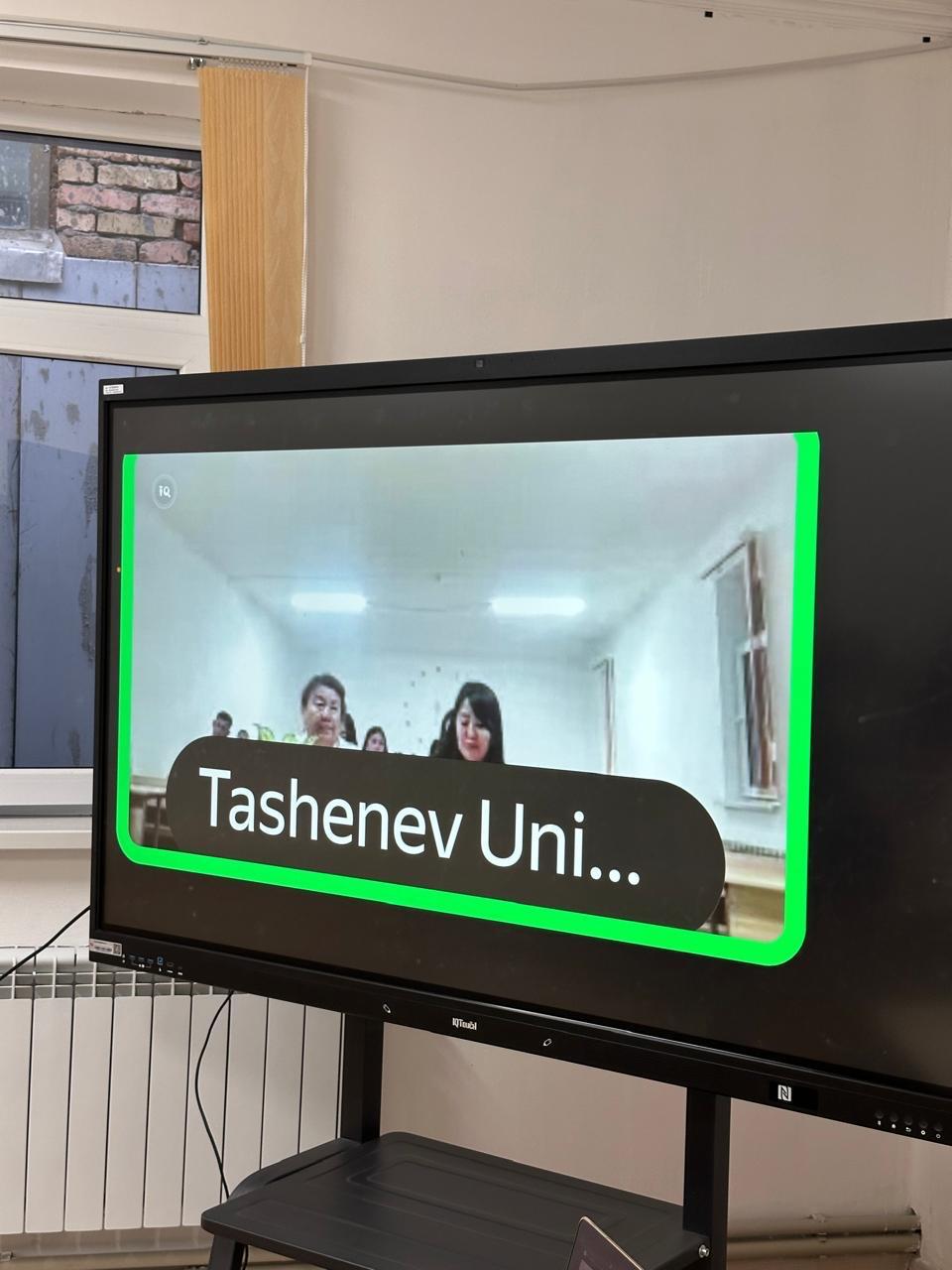
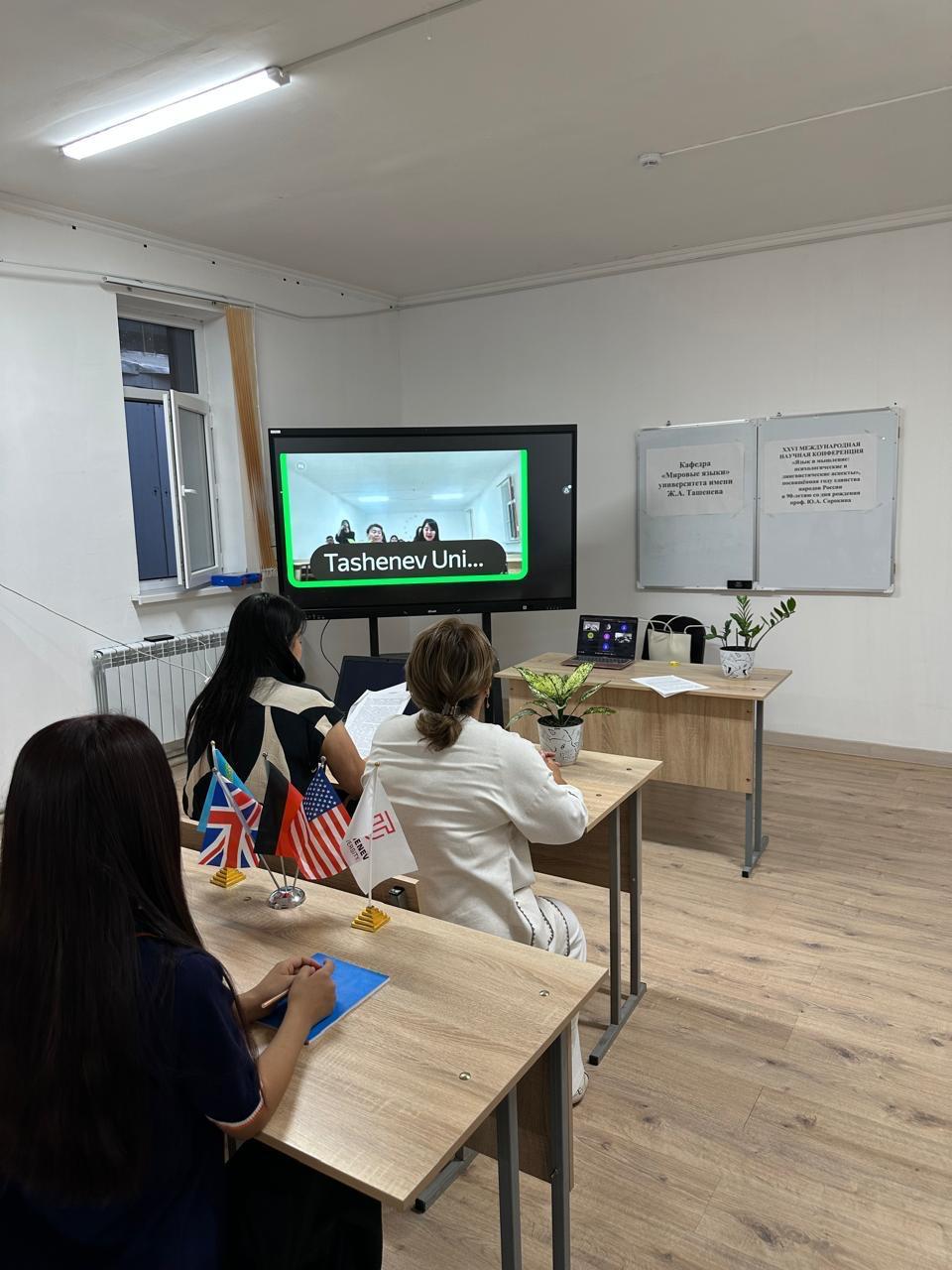
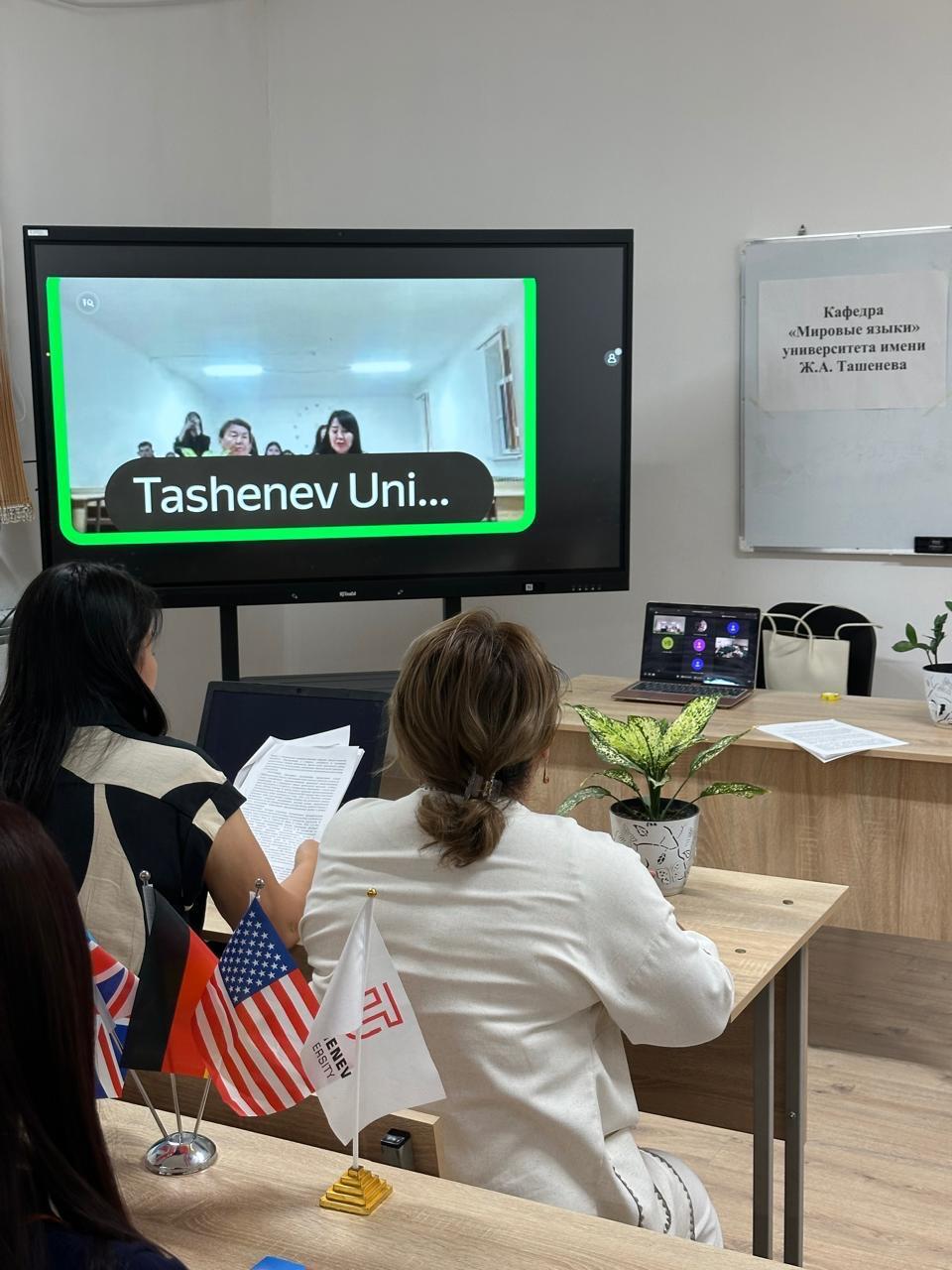
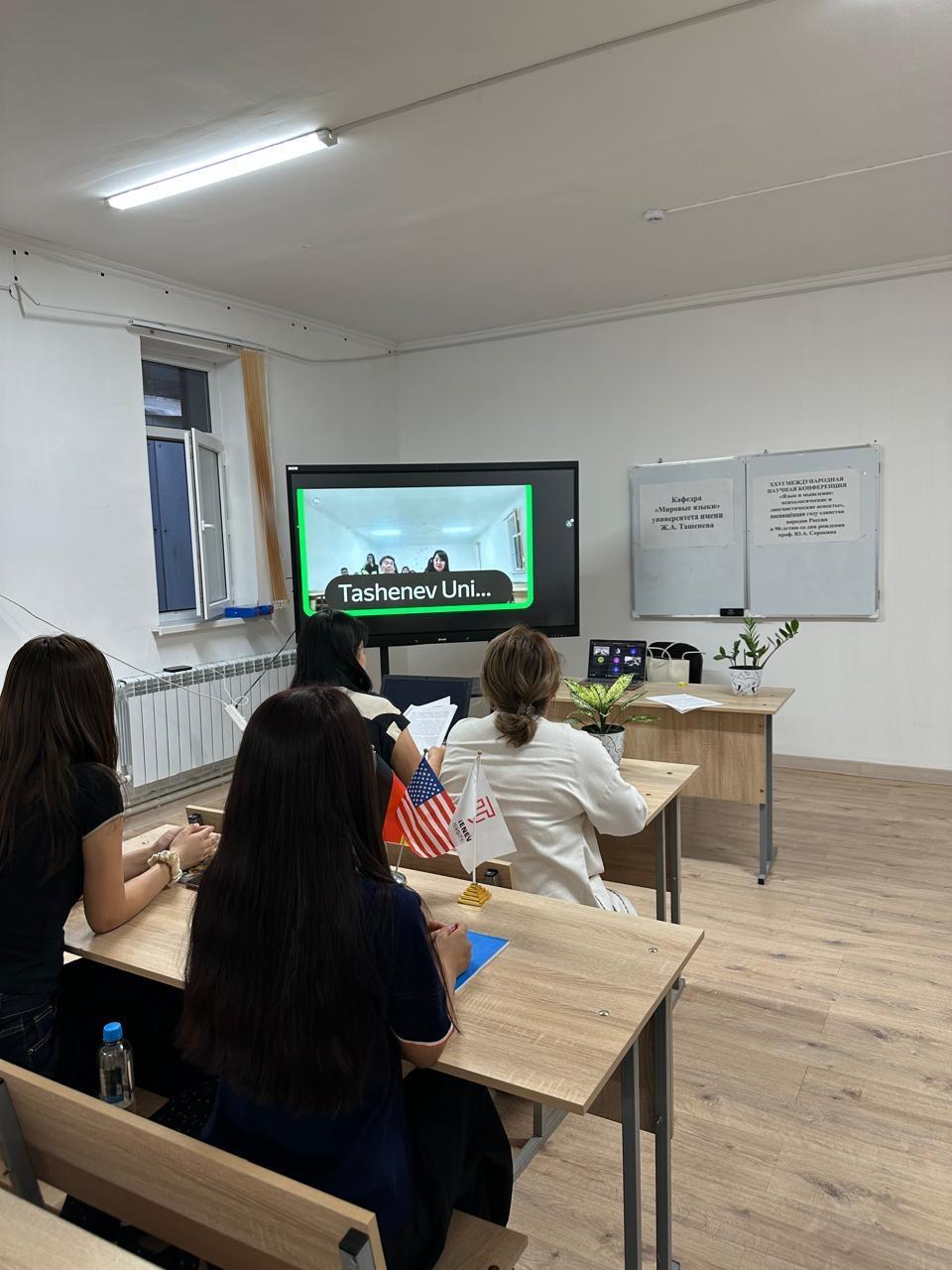
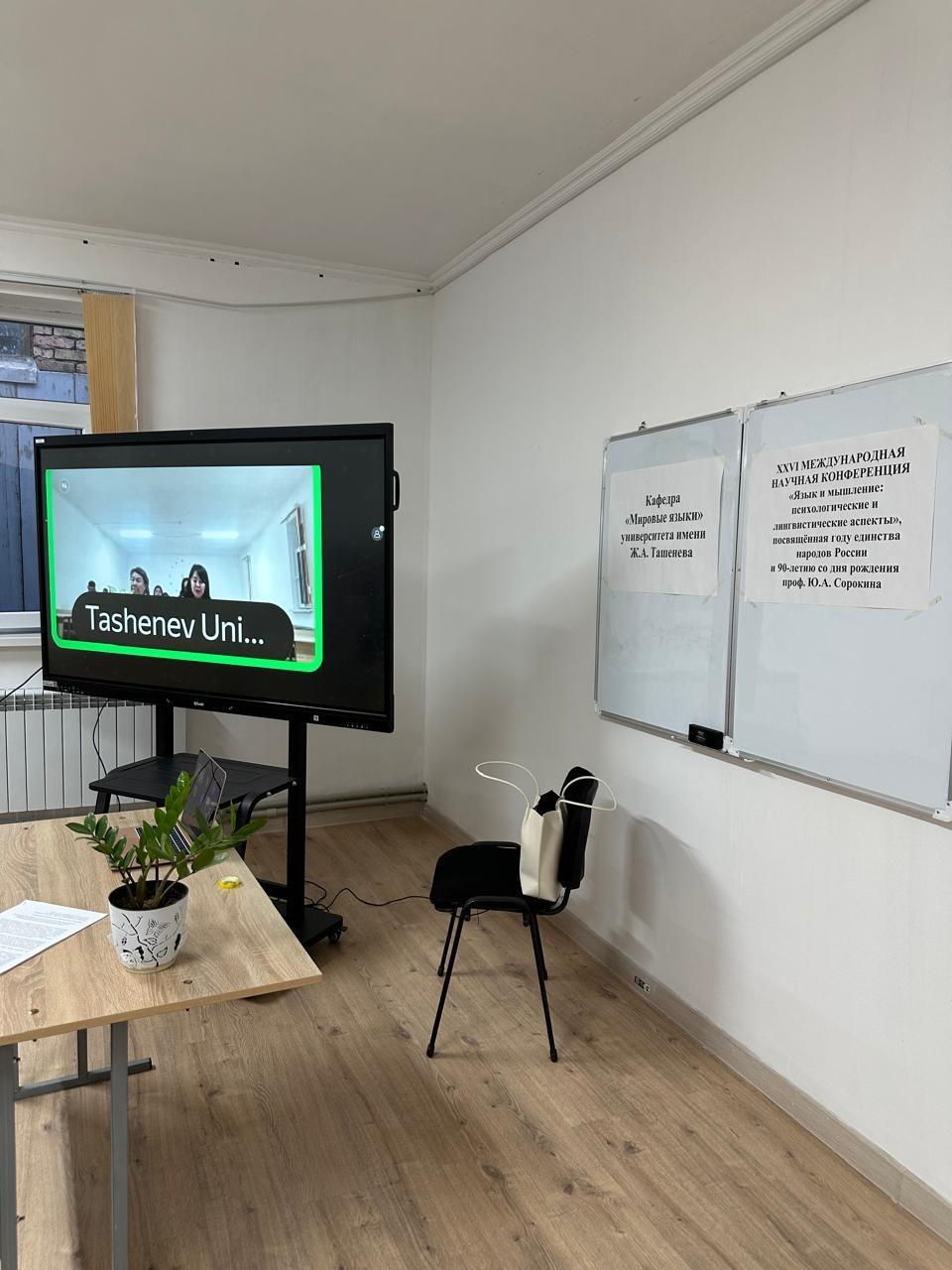
On September 16–17, 2026, the Department of World Languages of Zh. A. Tashenev University participated in the XXVI International Scientific Conference “Language and Thinking: Psychological and Linguistic Aspects”, organized by the Pokrov Branch of Moscow State Pedagogical University.
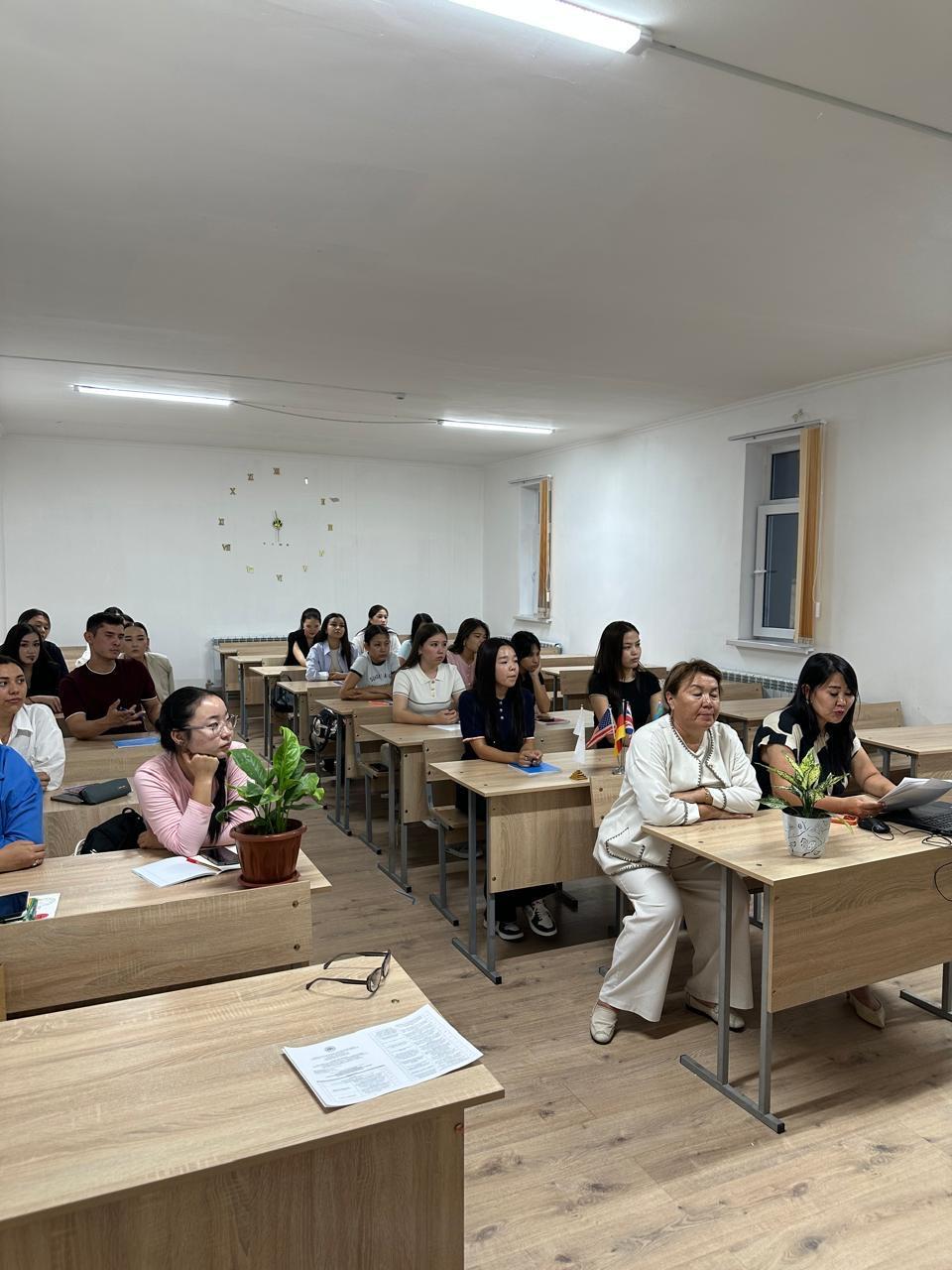
As part of the conference, a teleconference was held with the participation of the teaching staff of the Department of World Languages, master’s students of the educational program 7M01702 — “Foreign Languages: Training Teachers of Two Foreign Languages,” as well as students of the educational programs 6B01703 — “Foreign Languages: Training Teachers of Two Foreign Languages” and 6B01707 — “Foreign Languages (IP).”
During the teleconference, PhD, Acting Associate Professor Fazila Ilmarovna Artykbaeva, the head of the research project AP26197519 “Integration of Digital Technologies and Gamification in Foreign Language Teaching Based on Artificial Intelligence: New Horizons of Language Competence,” funded by the Science Committee of the Ministry of Science and Higher Education of the Republic of Kazakhstan for 2025–2027, together with Gul’dar Ismailovna Tursynova, Senior Researcher of the project, presented a paper entitled “Integration of Artificial Intelligence into Personalized Game-Based Learning: Psychological Mechanisms of Developing Learner Autonomy in Foreign Language Acquisition.”
The researchers presented the results of the project and shared their research findings and experience with international colleagues.
Following the presentation, an engaging discussion took place on the role of artificial intelligence in modern education. One of the key questions discussed was: “Can artificial intelligence replace a teacher?”
The teleconference provided a valuable platform for academic exchange, professional dialogue, and discussion of the prospects for using artificial intelligence in foreign language education. The participation of students and young researchers in such events contributes to strengthening their interest in research and fostering a culture of academic collaboration.