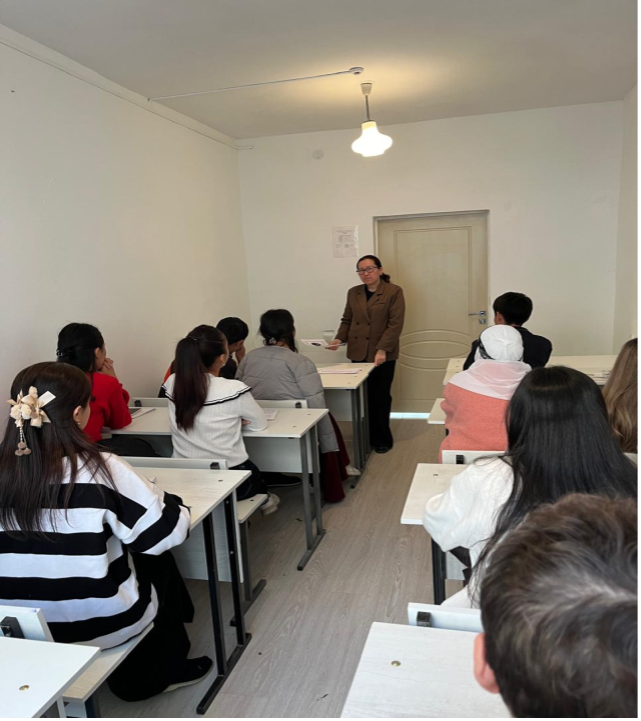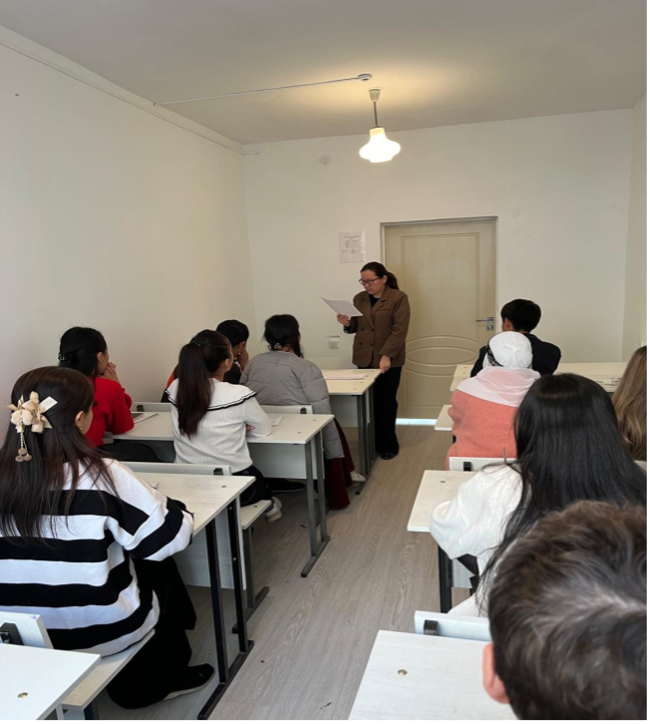
Open lesson
2026-01-06
JSC “ZHUMABEK AKHMETULY TASHENEV UNIVERSITY”
FACULTY OF PEDAGOGICAL AND HUMANITARIAN EDUCATION
DEPARTMENT OF PEDAGOGY AND PSYCHOLOGY
Lesson Topic: Development of the Inclusive Education System in Our Country
Type of Lesson: Practical class
Lesson Format: Group work, case analysis, reflection
Teaching Aids: Flipchart, markers, presentation, stickers, video materials
Venue: Room 208
The main goal of the modern inclusive education system is to create conditions for all learners to think independently, solve life problems, and develop professionally and personally, taking into account the diverse needs and capabilities of society. The role of the teacher in achieving this goal is crucial. A teacher is the organizer, guide, and facilitator of the inclusive learning process, a professional specialist who helps unlock the individual potential of each student.
The requirements for a modern inclusive educator are constantly increasing. Along with deep subject knowledge, an inclusive teacher must possess methodological competence in inclusive education, psychological and pedagogical readiness, the ability to work with students with special educational needs, digital competencies, effective communication skills, tolerance, and openness to innovation. The combination of these requirements defines the teacher’s inclusive professional competence.
Lesson Objectives:
To explain to students the essence, principles, and ways of forming the concept of “Inclusive Education.”
Expected Learning Outcomes:
Participants:
To prepare students to create conditions in the future for the comprehensive development and quality education of learners in inclusive school environments.
Teaching Methods:
• Question and answer
• Case study
• SWOT analysis
• Video analysis
Required Resources:
• Projector or interactive whiteboard
• Flipchart, markers
• Stickers, A4 paper
• Video or a short motivational clip
Lesson Analysis and Conclusion
Dear students, guests, and colleagues,
The main idea of today’s open lesson on the topic “Development of the Inclusive Education System in Our Country” is that a modern teacher is not only a specialist who has mastered their subject, but also an educator who works together with children in need of inclusive education to shape them into well-rounded individuals who continuously develop and grow.
Inclusive professional competence is not merely a set of a teacher’s knowledge, skills, and abilities; it also includes the ability to understand each learner, including children with special educational needs, to reveal each child’s potential by considering their individual abilities and opportunities, to effectively organize the inclusive learning process, and to master adapted and innovative pedagogical technologies. Inclusive pedagogical mastery is the creative and value-based expression of this competence. A truly skilled inclusive teacher is passionate about their profession, able to find a way to every student’s heart, and capable of designing accessible, comfortable, and impactful lessons for all learners.
In conclusion, I would like to emphasize that:
• the professionalism of an inclusive teacher is a guarantee of access to quality education for all learners;
• inclusive pedagogical mastery serves as a spiritual foundation that helps every student feel safe and accepted;
• continuous professional development, lifelong learning, and innovation are the key companions of a modern inclusive educator.
By learning from one another and sharing experiences, we can raise the quality of education to a new level. I hope today’s open lesson has provided you with valuable insights, new ideas, and inspiration.